
A comprehensive guide to one of the world’s most widely used corrosion-protection techniques from the chemistry of zinc to its role in modern infrastructure.
Why Steel Needs Protection
Steel is the backbone of modern civilization found in skyscrapers, bridges, ships, vehicles, and pipelines. Yet steel’s greatest weakness is also one of nature’s most relentless forces: corrosion. Left unprotected, iron and steel react with moisture and oxygen in a process that steadily weakens structural integrity, raising safety risks and maintenance costs.
Galvanization is the process of applying a protective zinc coating to steel or iron to prevent rusting. Today, galvanizing is one of the most cost-effective and widely practiced methods of corrosion control on earth.

The Science Behind Galvanization
Galvanization works through two complementary mechanisms: a physical barrier and electrochemical (cathodic) protection.
Zinc is more electrochemically active than iron. When both are connected in a corrosive environment, zinc acts as a sacrificial anode it corrodes preferentially, donating electrons to the iron and keeping it intact. Even if the zinc coating is scratched or chipped, nearby zinc continues to protect the exposed steel. This property makes galvanization far superior to paint-only coatings.

The Hot-Dip Galvanizing Process
The most common industrial galvanizing method is hot-dip galvanizing (HDG), a multi-step process that bonds zinc metallurgically to the base steel.
1 Degreasing / Cleaning
Steel is submerged in a caustic soda solution to remove oils, grease, and shop dirt from the surface.
2 Pickling (Acid Wash)
Immersion in dilute sulfuric or hydrochloric acid strips surface rust and mill scale, exposing clean bare metal.
3 Fluxing
The steel is dipped in a zinc ammonium chloride solution that prevents re-oxidation before immersion in the zinc bath.
4 Hot-Dip (Zinc Bath at ~450 °C)
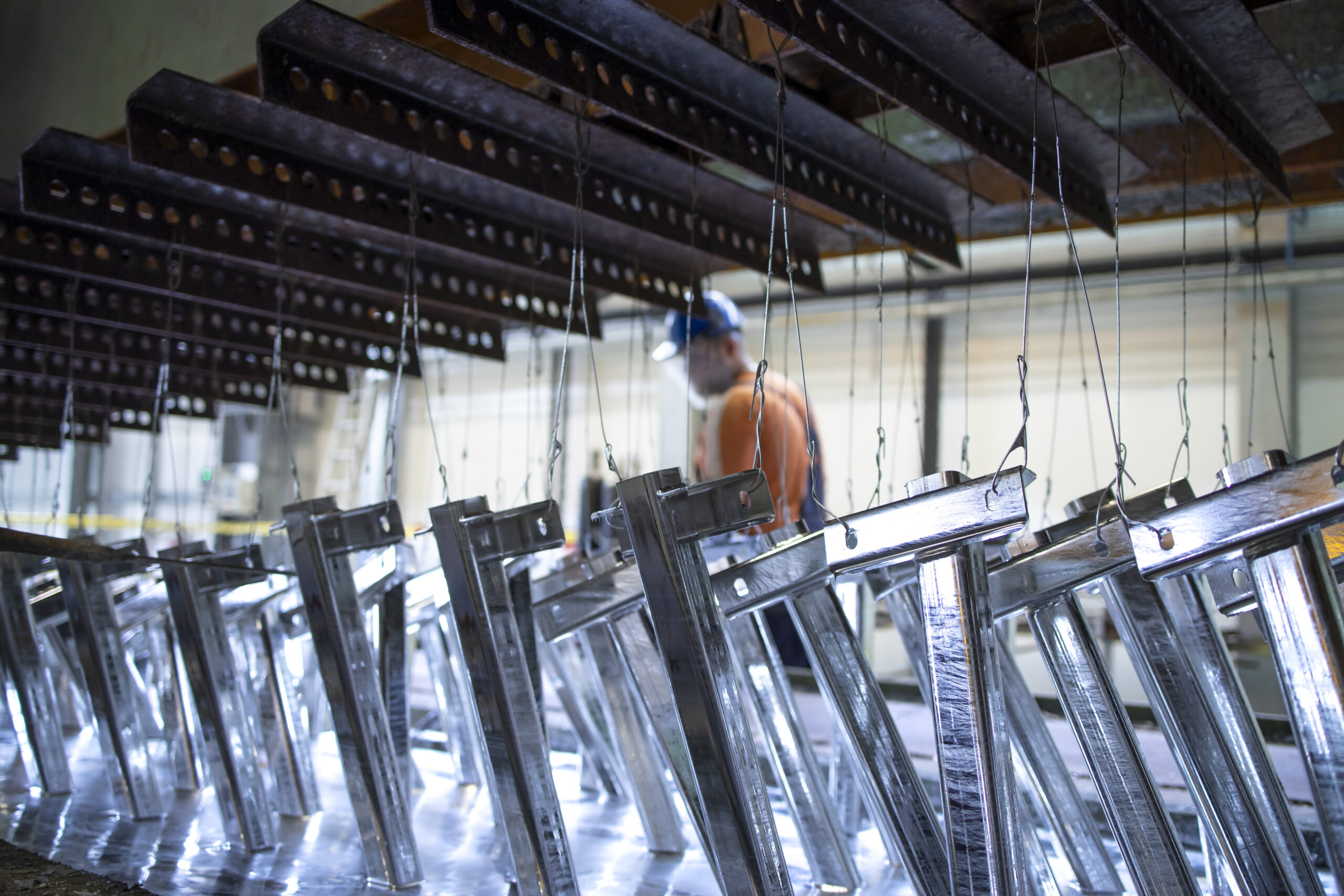
The prepared steel is submerged in a bath of molten zinc at approximately 450°C. Iron-zinc alloy layers form metallurgically on the surface.
5 Withdrawal & Cooling
The steel is withdrawn slowly, allowing excess zinc to drain. It is then quenched in water or left to cool in air.
6 Inspection
Coating thickness is measured via magnetic induction gauges and visually inspected per ASTM A123 / ISO 1461 standards.
Types of Galvanization
Not all galvanizing is the same. Different industrial needs call for different processes, each with distinct characteristics, thicknesses, and suitability.
| Type | Process | Coating Thickness | Best For | Grade |
| Hot-Dip Galvanizing | Immersion in molten zinc (~450°C) | 45–85 µm | Structural steel, beams, pipes, rebar | Heavy Duty |
| Electrogalvanizing | Electrodeposition of zinc in aqueous solution | 5–25 µm | Automotive panels, appliances, thin sheet metal | Precision |
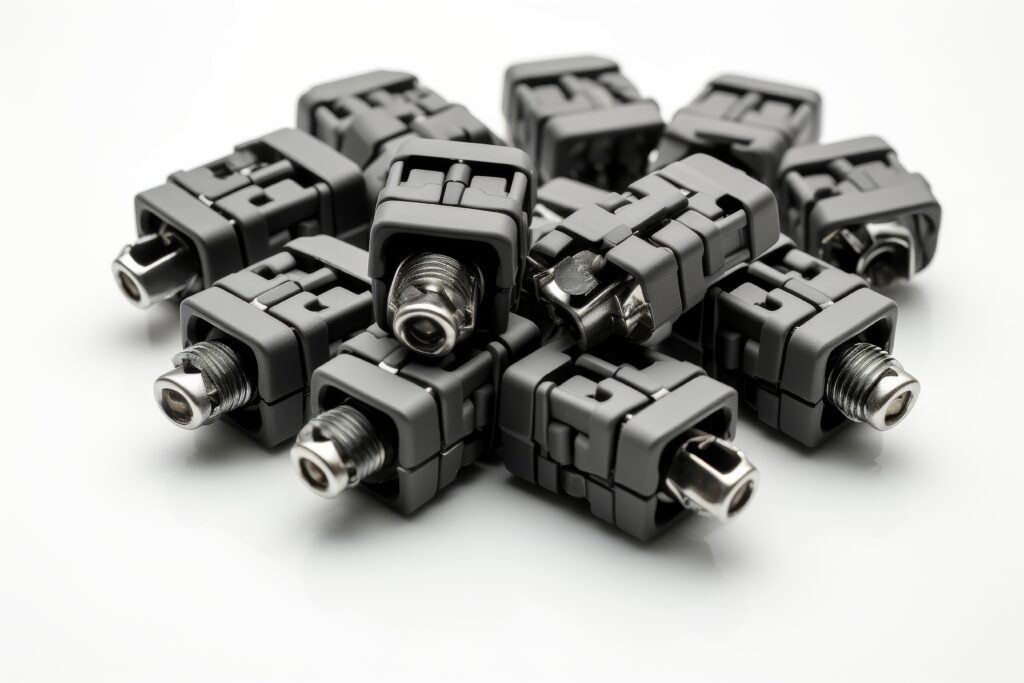
| Sherardizing | Zinc dust + heat treatment in rotating drum | 15–30 µm | Fasteners, small complex parts, threaded hardware | Specialty |
| Zinc Spraying (Metallizing) | Arc or flame spray of molten zinc particles | 75–150 µm | Bridges, large structures, field repairs | Heavy Duty |
| Continuous Galvanizing | Steel strip passed continuously through zinc bath | 10–30 µm | Roofing, cladding, coils, sheet products | Industrial |
| Zinc-Rich Painting | Paint primer with 80–90% zinc dust by weight | 50–125 µm (dry film) | Touch-up, maintenance, large assembled structures | Supplementary |
Service Life in Different Environments
The longevity of galvanized coatings varies dramatically depending on environmental exposure. Zinc corrodes at different rates in rural, urban, marine, and industrial settings a crucial factor for project planning and lifecycle costing.
Galvanizing vs. Other Corrosion Protection Methods
Engineers must often choose between several competing corrosion control strategies. The table below compares galvanizing to painting, epoxy coating, and stainless steel across key performance metrics.
| Criterion | Hot-Dip Galvanizing | Paint / Organic Coat | Epoxy Coating | Stainless Steel |
| Initial Cost | Low–Medium | Low | Medium | Very High |
| Maintenance Required | Minimal | High (repainting every 5–10 yr) | Moderate | Very Low |
| Cathodic Protection | Yes (zinc sacrifices) | No | No | N/A (passive layer) |
| Scratch/Damage Recovery | Self-healing (zinc creep) | No — rust at breach | No | Yes (self-passivating) |
| Typical Service Life | 20–75+ years | 5–15 years | 10–25 years | 50–100+ years |
| Recyclability | 100% recyclable | Limited | Limited | 100% recyclable |
| Suitable for Complex Shapes | Yes (immersion covers all surfaces) | Yes (spraying) | Moderate | Limited (fabrication cost) |
Industrial & Economic Importance
Galvanization isn’t just a coating process it is a foundational enabler of the modern built environment. Its importance spans infrastructure, manufacturing, agriculture, transportation, and energy.
🏗️Construction & Infrastructure
Structural beams, rebar, guardrails, roofing sheets, and utility poles rely on galvanized steel for decades of maintenance-free service.
🚗Automotive Industry
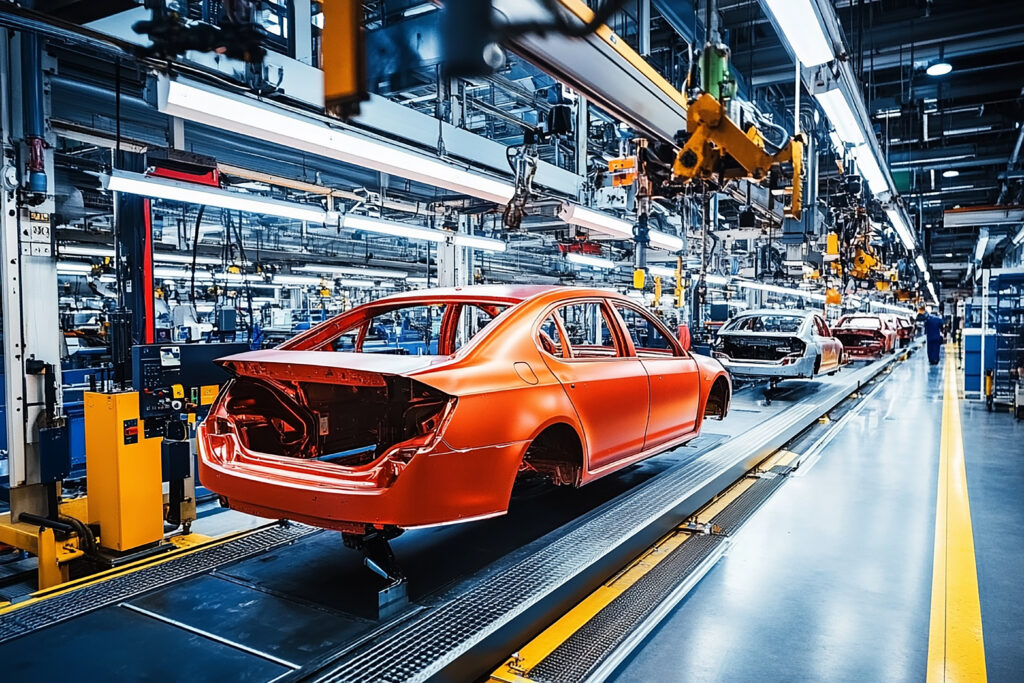
Electrogalvanized body panels extend vehicle lifespan and reduce warranty claims. Over 70% of modern car body panels are zinc-coated.
⚡Energy & Utilities
Transmission towers, wind turbine structures, solar racking, and pipeline supports are hot-dip galvanized for 50+ year lifespans.
🌾Agriculture
Fencing, irrigation pipes, grain silos, and equipment supports are galvanized to withstand fertilizers, moisture, and soil exposure.
🚢Marine & Offshore
Galvanized components are used in port infrastructure, offshore platforms, and ship components where salt spray accelerates corrosion.
♻️ Sustainability
Galvanized steel is 100% recyclable; the zinc-steel system can be separated and both metals recovered at end of life with no waste.

Global zinc consumption by end-use sector (%)
Frequently Asked Questions
Q1. What is the difference between galvanized and stainless steel?
Galvanized steel is carbon steel coated with a layer of zinc for corrosion protection, while stainless steel is an alloy containing chromium (typically 10.5–30%) that forms a self-passivating oxide layer. Galvanized steel is far more economical; stainless steel offers superior performance in highly corrosive or hygienic environments (food, medical). For most structural applications, galvanized steel offers a much better cost-to-protection ratio.
Q2. Can galvanized steel be welded?
Yes, but with precautions. Welding galvanized steel releases zinc oxide fumes, which can cause metal fume fever if inhaled. Proper ventilation, respiratory protection, and stripping the zinc coating near the weld zone are essential. After welding, the bare area must be treated with zinc-rich paint or cold galvanizing compound to restore corrosion protection.
Q3. Is galvanized steel safe for food or water contact?
Galvanized steel is generally not recommended for potable water or food contact in acidic conditions. At pH below 6.5 or above 12, zinc leaches at elevated rates. For potable water systems, materials such as copper, HDPE, or approved stainless steel are preferred. Galvanized steel is, however, widely used for non-potable agricultural irrigation and outdoor water troughs.
Q4. How do I know if my galvanized coating has failed?
Early warning signs include: the appearance of red rust (iron oxide), which indicates the zinc layer is fully consumed; significant white rust (zinc hydroxide/carbonate deposits), which can indicate wet storage damage; and coating delamination or flaking. Periodic inspection using magnetic coating thickness gauges allows preventive maintenance before full failure occurs.
Q5. What is white rust and how is it prevented?
White rust (zinc hydroxide) forms when freshly galvanized surfaces are exposed to moisture in poorly ventilated conditions common during shipping and storage. It appears as a bulky white powder. Prevention involves ensuring stacked galvanized products have adequate air circulation, avoiding direct contact stacking, and using desiccant packing. Light white rust is cosmetic and does not significantly affect long-term corrosion protection.
Q6. Can I paint over galvanized steel?
Yes — this is called a duplex system and combines both zinc and organic coating protection, extending service life by a factor of 1.5–2.5× compared to either system alone. However, newly galvanized steel must first be “weathered” (allowed to oxidize slightly) or chemically pre-treated (e.g., with a wash primer or zinc phosphate) to ensure paint adhesion. Painting fresh galvanized surfaces without preparation leads to peeling.
Q7. Is galvanization environmentally sustainable?
Galvanization has strong sustainability credentials. Zinc is a naturally occurring element and both zinc and steel are 100% recyclable at end of life. The extended service life of galvanized assets means fewer replacements and less embodied energy over time. Modern galvanizing plants also recycle acids, capture zinc dust, and treat wastewater. However, zinc ecotoxicity in aquatic environments must be managed, particularly in runoff from industrial sites.
Q8. What standards govern galvanization quality?
The primary international standards are: ASTM A123 (hot-dip galvanizing of structural steel in the USA), ISO 1461 (the global equivalent), ASTM A153 (hardware and fasteners), EN ISO 14713 (guidelines for protection of iron and steel), and AS/NZS 4680 (used in Australia and New Zealand). These standards specify minimum coating thickness, adhesion requirements, visual inspection criteria, and test methods.