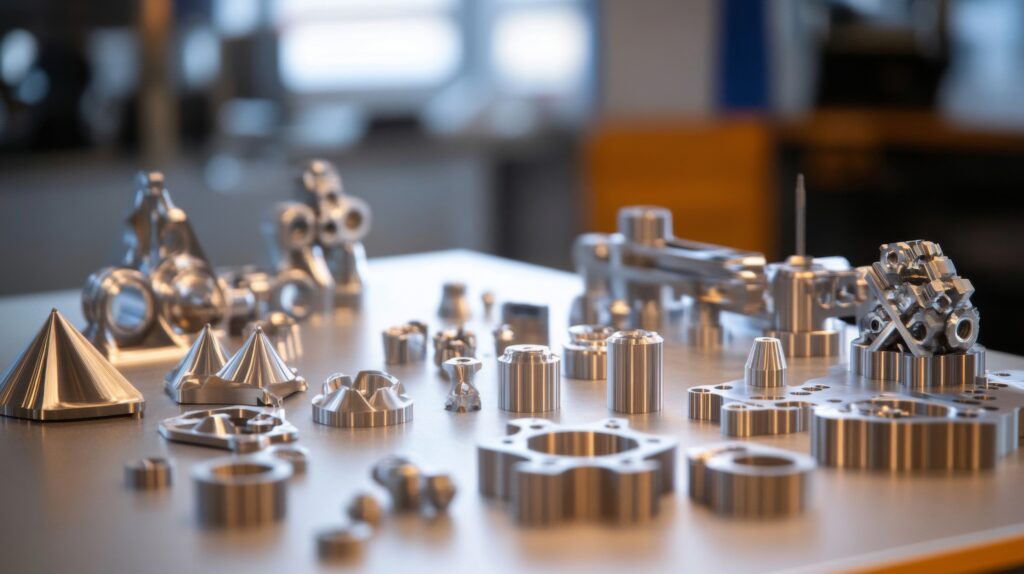

Sheet metal processing is a fundamental manufacturing technique used to transform flat metal sheets into precision-engineered components through cutting, bending, forming, welding, and finishing operations. Widely adopted across industries such as automotive, aerospace, electronics, industrial equipment, and consumer products, this process enables the production of durable, lightweight, and cost-effective parts at scale. With advancements in CNC technology, automation, and design software, modern sheet metal fabrication delivers high accuracy, repeatability, and efficiency making it an essential part of today’s engineering and manufacturing ecosystem.
From raw alloy selection through laser cutting, precision forming, surface finishing, and the emerging technologies reshaping the factory floor, an authoritative guide to modern sheet metal fabrication.

Material Selection: The Foundation of Every Decision
Sheet metal fabrication begins long before any machine starts with alloy selection. The choice of material dictates every downstream parameter: permissible bend radii, welding procedure, surface treatment, and final tolerance capability.
Sheet thickness is classified by gauge. Cold-rolled steel (CRS) spans 0.4 to 3.0 mm and offers exceptional surface quality, making it the preferred substrate for enclosures, panels, and precision stampings. Hot-rolled steel (HRS), covering 3.0 to 12 mm, is suited for structural components where dimensional precision is secondary to bulk mechanical strength.
Strength-to-weight advantage: Aluminum alloys 5052 and 6061 deliver approximately 3× better strength-to-weight performance than steel, alongside excellent corrosion resistance, a combination that makes them indispensable in aerospace, transport, and consumer electronics.
Stainless steel grades 304 and 316, with chromium content at or above 10.5%, self-passivate in atmospheric oxygen forming a thin, adherent oxide layer that resists corrosion without additional coating. This makes them the default choice in food processing, pharmaceutical, and chemical handling environments. Where carbon steel is required but corrosion protection is needed, a galvanized sheet with a zinc coating of 80–275 g/m² provides durable atmospheric protection at lower cost.
Core Processing Operations
1. Cutting & Shearing:
The precision hierarchy of cutting methods runs from waterjet at the top of metallurgical neutrality, through laser cutting for speed and accuracy, down to plasma for heavy-section throughput.

Fiber lasers have displaced CO₂ systems across most production environments. Their shorter wavelength (1.07 µm vs 10.6 µm) couples far more efficiently into metal surfaces, reducing energy consumption while enabling higher cut speeds on thin to medium gauges. Waterjet remains unchallenged in applications where a heat-affected zone (HAZ) would compromise material properties; hardened steel, composites, and stacked laminates are common examples.
2. Bending & Forming
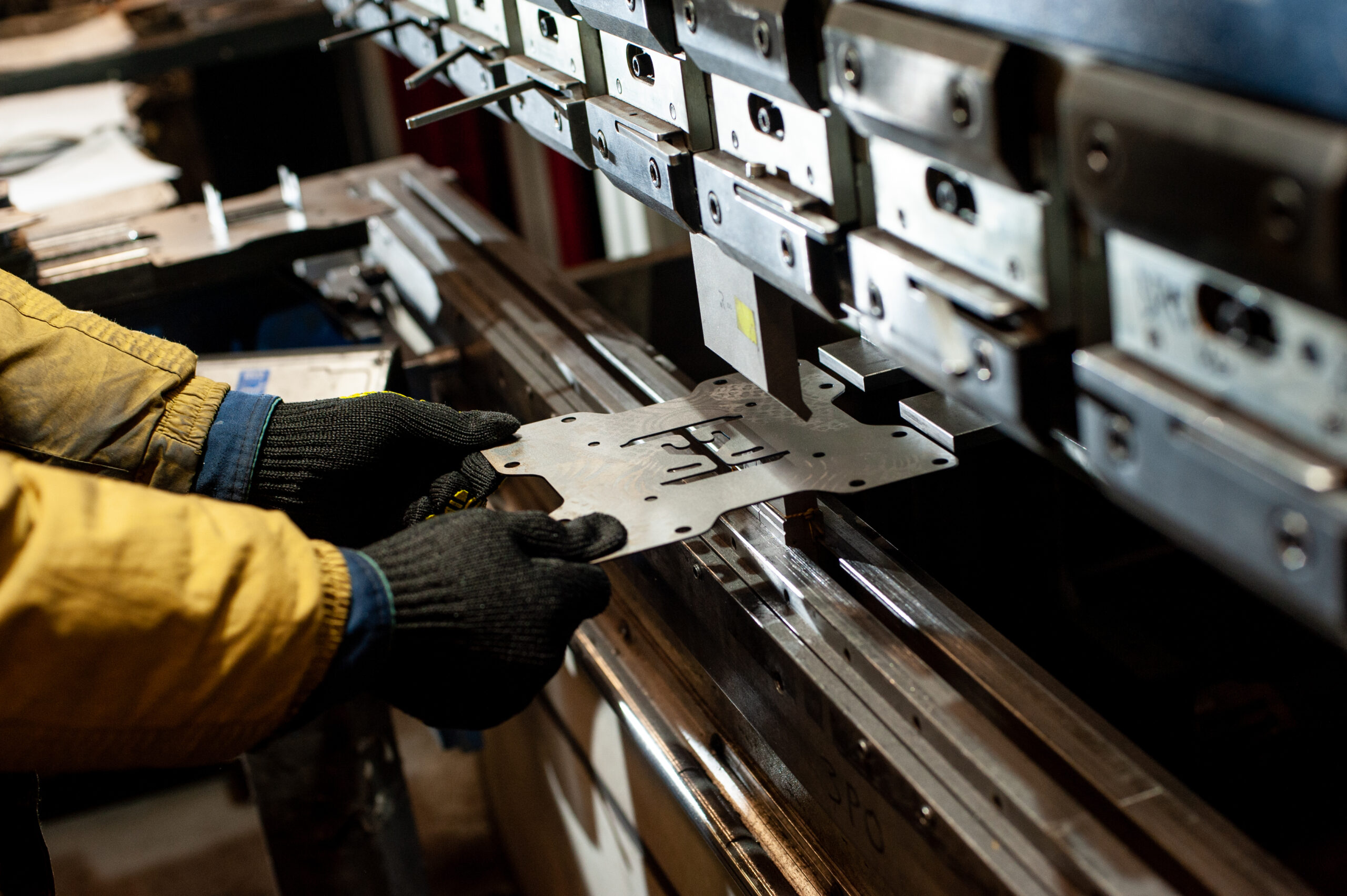
Press brake bending is the workhorse of sheet metal forming. The minimum permissible bend radius is governed by ductility: approximately 1T (one material thickness) for mild steel, 2T for stainless steel, and approaching 0T for soft aluminum. Exceeding these limits initiates intergranular cracking along the outer tensile fiber of the bend.
BA = (π ÷ 180) × (R + K × T) × Angle | K-factor: 0.33–0.50
Spring back the elastic recovery that occurs when bending load is released demands deliberate overbend compensation, typically 2°–5° for steel, though the exact value varies with yield strength, thickness, and tooling geometry. High-strength advanced steels (AHSS/UHSS above 980 MPa) exhibit severe spring back, which is now addressed with laser-assisted bending that locally softens the bend zone.
Deep drawing is quantified through the draw ratio (DR), defined as blank diameter divided by punch diameter. For steel in a single draw operation, the theoretical maximum of approximately 2.2 is rarely exceeded without intermediate annealing. Roll forming achieves continuous profile bending at speeds up to 30 m/min, making it the most economical method for long prismatic sections.
3. Stamping
Progressive die stamping compresses multiple operations blanking, piercing, bending, and coining into a single press stroke with tolerances as tight as ±0.05 mm. Blanking force is calculated as perimeter multiplied by sheet thickness multiplied by ultimate shear strength (approximated at 0.8× UTS). Transfer dies handle larger parts that cannot advance step-by-step through a progressive sequence, moving discrete blanks between successive forming stations.
4. Joining Processes
Material gauge and application environment determine the appropriate joining method. MIG (GMAW) welding handles the 0.8–6 mm range efficiently; TIG (GTAW) delivers superior precision on gauges below 2 mm, favoured in aerospace and instrumentation. Spot welding dominates high-volume automotive production: nugget diameter scales with sheet thickness by the rule-of-thumb 5√t, with welding currents in the 8,000–15,000 A range.
Where welding distortion is unacceptable, riveting preserves dimensional integrity. Clinching and TOX joining create cold mechanical bonds without fasteners or heat particularly valuable when dissimilar metals or coated surfaces preclude fusion welding.
Tooling: The Economics of Die Life
Punch and die tooling represents a significant capital commitment. Tool steels D2 (Cr12MoV), H13, and M2 HSS are heat-treated to 58–64 HRC to resist abrasive wear. For the highest-volume applications, tungsten carbide tooling is standard, with die life expectations of 500,000 to 2,000,000 strokes an order of magnitude beyond tool steel.
Critical parameter: Punch-to-die clearance of 5–15% of sheet thickness per side governs cut-edge quality. Insufficient clearance creates secondary shear; excessive clearance produces excessive burr height and rollover depth.
Surface Treatments & Finishing
| Process | Primary Purpose | Thickness | Status |
| Powder coating | Corrosion protection & aesthetics | 60–120 µm | Industry standard |
| Electroplating (Zn, Ni) | Corrosion resistance | 5–25 µm | Industry standard |
| Anodizing (Al) | Hardness, oxide layer build-up | 5–25 µm | Industry standard |
| Phosphating | Paint adhesion primer | 1–5 µm | Pre-treatment only |
| Passivation (SS) | Remove free iron contamination | Chemical only | Industry standard |
Powder coating has emerged as the dominant decorative and protective finish for mild and galvanized steel components. Its 60–120 µm build provides superior impact resistance compared to liquid paint systems, and its solvent-free chemistry aligns with increasingly stringent VOC regulations. Anodizing converts the aluminum surface itself into a dense aluminum oxide layer integral rather than applied providing hardness and wear resistance impossible with organic coatings.
Check Here : Custom Sheet Metal Fabrication for OEMs: 4 Valuable Insights
Tolerances, Standards & Quality Frameworks
Dimensional accuracy requirements are governed by a hierarchy of international standards. ISO 2768 defines general tolerances for linear dimensions (±0.1 to ±0.5 mm) and angular features. DIN 6930 provides tighter, sheet-metal-specific tolerances. Flatness expectations vary by process: laser-cut parts typically hold ±0.5 mm/m; press-formed components are held to ±1.0 mm/m.
Hole position accuracy illustrates the capability gap between processes: punching achieves ±0.15 mm, while laser cutting delivers ±0.05 mm. For assemblies requiring tight positional relationships mounting hole patterns, connector cutouts this difference is decisive.
ISO 9001 — Quality Management
AS9100 — Aerospace
IATF 16949 — Automotive
ASTM A1008/A1011 — Steel Sheet
EN 10130 — EU Cold-Rolled
Emerging Technologies Reshaping the Industry
- Incremental Sheet Forming (ISF)A CNC-driven stylus traverses programmed tool paths, progressively deforming sheet metal without dedicated hard tooling. Die costs approach zero, making ISF compelling for prototype and low-volume production of complex geometries that would otherwise require expensive dedicated tooling.
- Electromagnetic Forming Pulsed magnetic fields accelerate sheet metal to high velocity against a die surface in microseconds. The inertial forming mechanism reduces spring back substantially and enables joining of dissimilar materials without mechanical fasteners or adhesives.
- Laser-Assisted Bending Targeted laser heating of the bend line reduces yield strength locally before press brake engagement. This is particularly impactful on advanced high-strength steels (AHSS/UHSS above 980 MPa), where spring back otherwise demands multiple correction cycles and increases cycle time significantly.
- AI-Based Nesting Optimization Machine learning algorithms solve the irregular polygon packing problem across large sheet formats in seconds. Scrap rates fall to below 8% compared with 15–20% under manual nesting delivering material savings that directly translate to per-part cost reduction at scale.
Sheet metal processing sits at the intersection of materials science, mechanical engineering, and digital manufacturing. As AHSS alloys push yield strengths beyond 1,500 MPa and AI tools compress engineering cycle time, the discipline continues to evolve requiring practitioners to maintain fluency across metallurgy, process engineering, and software-driven optimization simultaneously.