
In today’s competitive manufacturing environment, precision, speed, and flexibility are critical for success. Industries such as aerospace, automotive, medical, and industrial equipment are constantly pushing for complex designs with tighter tolerances and faster production cycles. To meet these demands, 5 axis CNC machining has become one of the most advanced and reliable manufacturing solutions.
A 5 axis CNC machine allows manufacturers to produce highly complex components with superior accuracy in a single setup. Unlike conventional machining methods, five axis machining enables simultaneous movement across multiple axes, reducing errors, improving efficiency, and enhancing overall product quality. As a result, it has become a preferred choice for modern engineering and precision manufacturing.
What is a 5 Axis CNC Machine?
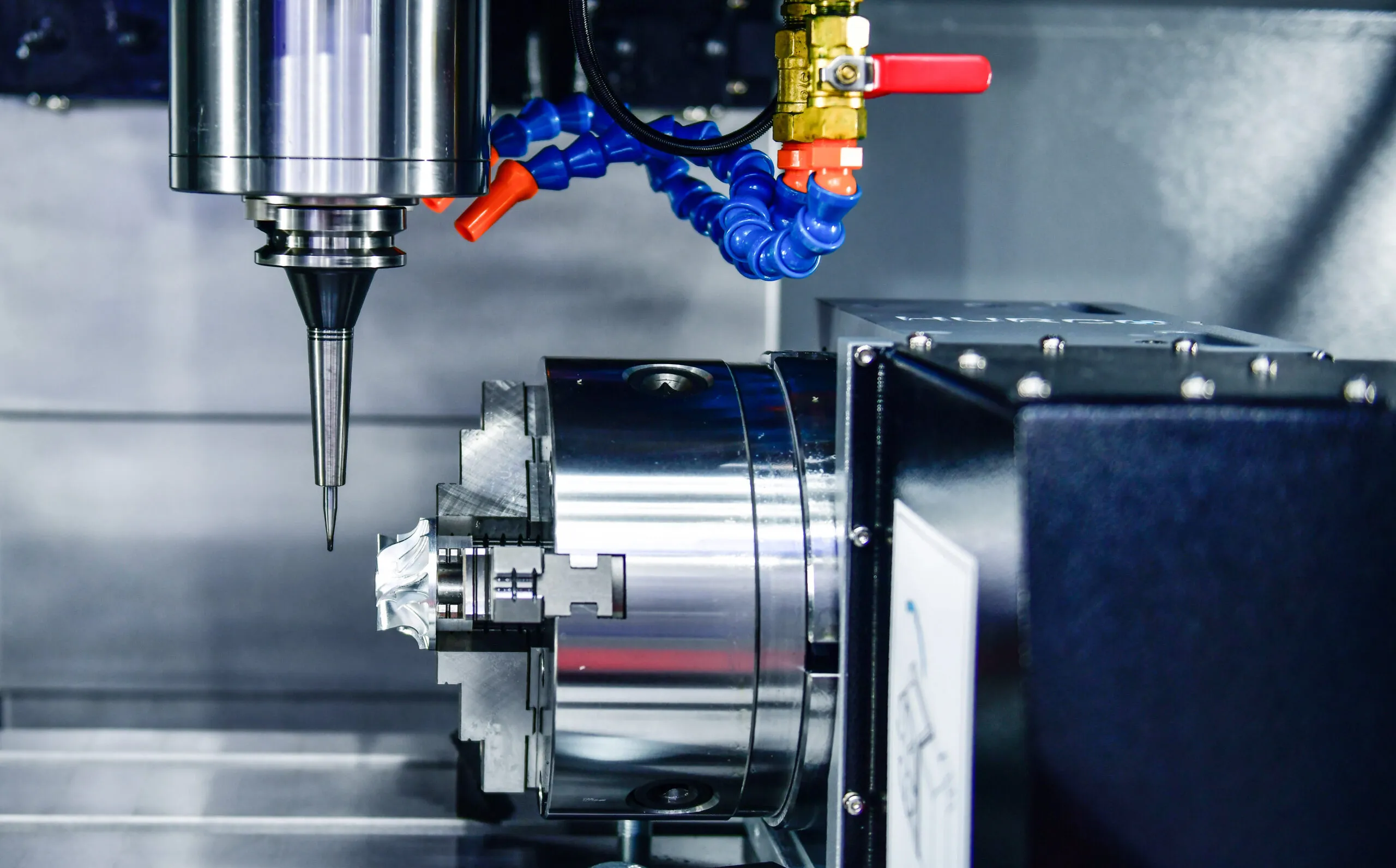
A 5 axis CNC machine is a computer-controlled machining system capable of moving a cutting tool or workpiece along five different axes. These include three linear axes (X, Y, Z) and two rotational axes (A, B, or C). This additional movement allows the cutting tool to approach the part from virtually any direction.
In traditional machining, components often need to be repositioned multiple times to access different surfaces. However, with 5 axis CNC machining, most operations can be completed in a single setup. This significantly improves accuracy and reduces production time.
Understanding the Axes in Five Axis Machining
| Axis | Type | Movement |
| X | Linear | Left to Right |
| Y | Linear | Front to Back |
| Z | Linear | Up and Down |
| A | Rotary | Around X-axis |
| B/C | Rotary | Around Y or Z-axis |
This combination of linear and rotary movement is what makes five axis machining highly efficient for complex geometries and precision components.
Why 5 Axis CNC Machining is Important in Modern Industry
As product designs evolve, manufacturers are dealing with increasingly complex geometries, tighter tolerances, and reduced lead times. A 5 axis CNC machine helps address these challenges by enabling high-precision machining in fewer steps.
Key reasons industries adopt 5 axis CNC machining:
- Ability to machine complex shapes and contours
- Reduction in multiple setups
- Improved dimensional accuracy
- Faster production cycles
- Enhanced surface finish
- Lower risk of human error
Because of these advantages, 5 axis CNC machining is widely used in high-performance industries where precision is critical.
Benefits of 5 Axis CNC Machining
1. High Precision and Tight Tolerances
One of the biggest advantages of a 5 axis CNC machine is its ability to achieve extremely tight tolerances. Since the part is machined in a single setup, alignment errors are minimized.
2. Reduced Setup Time
In conventional machining, multiple setups are required to access different surfaces. Five axis machining eliminates this need, saving time and improving efficiency.
3. Complex Geometry Machining
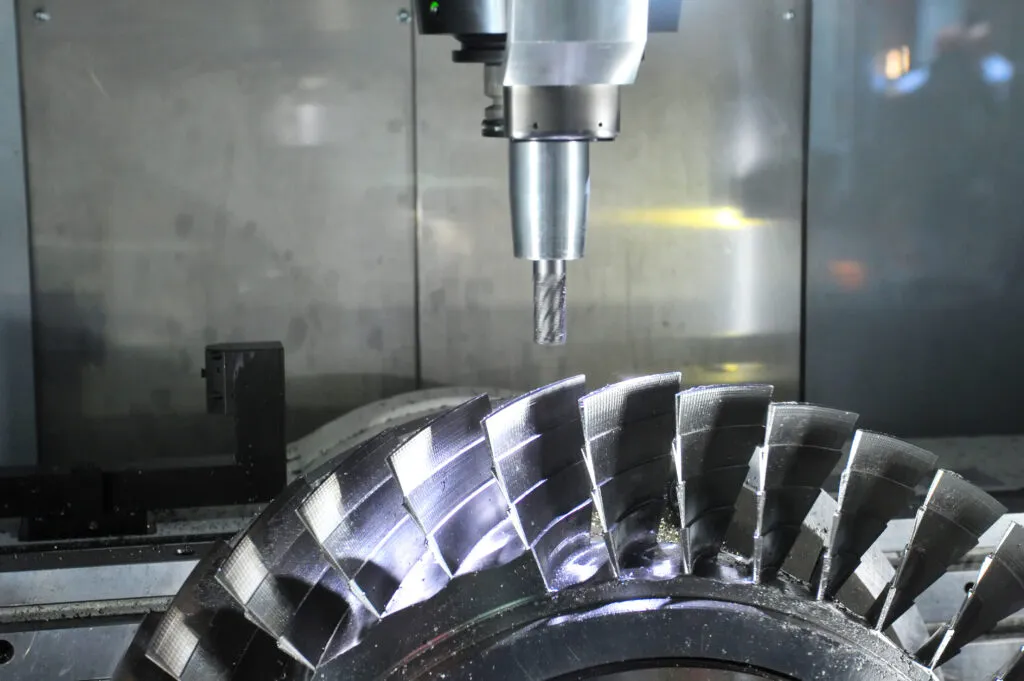
Components with curved surfaces, deep cavities, and intricate designs can be easily manufactured using 5 axis CNC machining.
4. Superior Surface Finish
Better tool positioning reduces vibration and improves surface quality, often eliminating the need for secondary finishing processes.
5. Increased Productivity
Fewer setups and faster machining cycles lead to higher production output.
6. Longer Tool Life
Optimized cutting angles reduce wear and extend tool life, lowering operational costs.
3 Axis vs 5 Axis CNC Machine Comparison
| Feature | 3 Axis CNC | 5 Axis CNC Machine |
| Setup Requirement | Multiple | Single |
| Complexity Handling | Limited | Excellent |
| Accuracy | Moderate | High |
| Production Speed | Slower | Faster |
| Surface Finish | Good | Superior |
| Efficiency | Medium | High |
This comparison clearly shows why 5 axis CNC machining is gaining popularity across industries.
Check Article : Precision Machining: Advanced technology for Accurate and Reliable Components Across Industries
Applications of 5 Axis CNC Machines in Industry
The versatility of a 5 axis CNC machine makes it suitable for a wide range of industries. Its ability to produce complex and high-precision components has made it indispensable in modern manufacturing.
Major industrial applications include:
- Aerospace Industry
Used for turbine blades, engine components, and structural parts that require high precision. - Automotive Industry
Helps manufacture engine parts, transmission components, and lightweight structures. - Medical Industry
Essential for producing implants, prosthetics, and surgical instruments with tight tolerances. - Industrial Equipment Manufacturing
Used for pump housings, valve bodies, compressor parts, and robotic components. - Energy Sector
Plays a key role in producing turbine parts and oil & gas equipment.
How 5 Axis CNC Machining Improves Manufacturing Efficiency
The efficiency of five axis machining lies in its ability to perform multiple operations in a single setup. This not only reduces production time but also improves consistency across parts.
Efficiency improvements include:
- Reduced manual intervention
- Lower setup and fixturing time
- Faster cycle times
- Reduced scrap and rework
- Better repeatability in mass production
These advantages make 5 axis CNC machining a cost-effective solution in the long run.
Challenges of 5 Axis CNC Machining
While the benefits are significant, there are certain challenges associated with a 5 axis CNC machine:
- Higher initial investment
- Complex programming requirements
- Need for skilled operators
- Maintenance costs
However, with proper planning and expertise, these challenges can be effectively managed.
Future of Five Axis Machining
The future of 5 axis CNC machining is closely linked with advancements in automation and smart manufacturing. Technologies such as AI-driven toolpaths, real-time monitoring, and digital twins are making machining processes more efficient and reliable.
As industries move towards Industry 4.0, the demand for 5 axis CNC machines is expected to grow significantly. Manufacturers who adopt this technology early will gain a competitive advantage in terms of quality, speed, and innovation.
A Quick Thought
A 5 axis CNC machine represents a major leap in manufacturing technology. By enabling complex machining operations in a single setup, 5 axis CNC machining improves precision, reduces production time, and enhances overall efficiency.
From aerospace to industrial equipment manufacturing, five axis machining is transforming the way components are produced. While the initial investment may be higher, the long-term benefits in terms of productivity, quality, and cost savings make it an essential tool for modern manufacturers.
Frequently Asked Questions (FAQ)
What is the use of a 5 axis CNC machine?
A 5 axis CNC machine is used to manufacture complex and high-precision components across industries like aerospace, automotive, and medical.
Is 5 axis CNC machining expensive?
Although the machine cost is higher, 5 axis CNC machining reduces overall production costs by minimizing setups and improving efficiency.
What materials can be machined using five axis machining?
Materials include aluminum, stainless steel, titanium, plastics, and composites.
How accurate is a 5 axis CNC machine?
It can achieve very tight tolerances, often within ±0.005 mm depending on conditions.
Why is five axis machining better than 3 axis?
Because it allows multi-directional machining in a single setup, improving accuracy and reducing production time.