
The manufacturing problem nobody puts on the spec sheet
A semiconductor tester, a hydraulic test bench, a calibration rig for EV battery packs: each is built to measure something else with precision. None of them is built by the thousand.
A typical specialized test system ships in quantities of 5, 50 or perhaps 500 a year. Yet a single unit can carry a bill of materials with hundreds to several thousand line items: machined frames, sheet-metal enclosures, precision fixtures, PCBs, cable harnesses, pneumatics, sensors and software. Every unit must then prove itself in functional testing before it leaves the floor.
That combination low volume, high variety, high engineering complexity is the definition of high-mix, low-volume (HMLV) manufacturing. It is also where most traditional supply chains break down.
The core insight is simple: manufacturing flexibility is worth the most when product variety and engineering complexity are both high. Test equipment and specialized industrial products sit squarely in that corner. This article explains why, with the numbers behind it, and what OEMs should look for in a manufacturing partner.
Two things stand out. First, demand for test capability grows with every wave of new technology: AI accelerators, EV powertrains, 5G and 6G radios, medical devices and aerospace systems. Each needs its own test rigs, fixtures and validation stations.
Second, the companies that serve this demand do it through breadth, not volume. A large test-equipment maker can list thousands of product variants, options and custom configurations. Smaller specialist OEMs the ones building end-of-line testers, leak-test stations or hardware-in-the-loop rigs may build only a handful of units per design. The market is big. The batches are small.
Four traits that make specialized equipment different
1. Low quantities
Specialized equipment is built to order or in small lots. A production line might need two end-of-line testers. A research lab might order one environmental chamber. A defense or aerospace program might require 20 qualification rigs over three years.
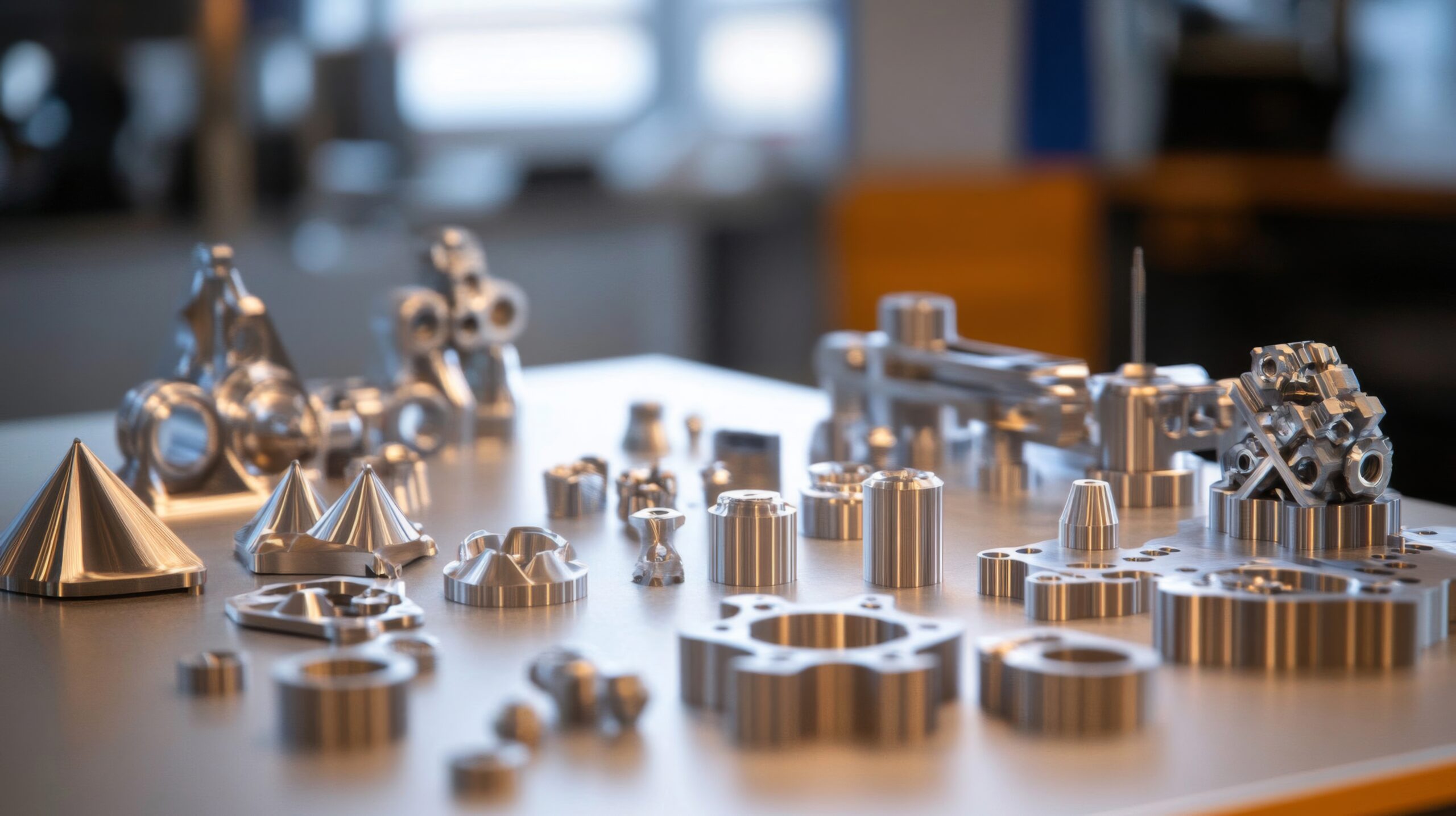
Dedicated injection molds or progressive dies costing tens of thousands of dollars rarely make sense. Processes like CNC machining, laser cutting, press-brake forming and low-volume fabrication become the default and the supplier must be comfortable quoting and running a job of 3 pieces as seriously as a job of 3,000.
2. Diverse components
A single test station can combine:
- Machined aluminum or steel base plates and fixtures held to ±0.01 mm
- Sheet-metal enclosures, guards and panels with powder coat
- Weldments and structural frames
- Plastic and composite insulating parts
- Cable harnesses, PCBs, connectors and sensors
- Pneumatic and hydraulic subassemblies
Each category normally sits with a different supplier. For an OEM, that can mean 10 to 30 vendors for one product each with its own lead time, quality system and communication style. Coordination, not machining, often becomes the bottleneck.
3. Complex specifications
Test equipment measures other products, so it must be more accurate than what it measures. A common metrology guideline is a test accuracy ratio of 4:1 the tester should be at least four times more precise than the tolerance it checks.
That pushes requirements into tight geometric tolerances (flatness, parallelism, true position), controlled surface finishes, specific materials for thermal or electrical stability, and frequent engineering changes. Revisions are normal: a design may go through several ECOs between prototype and the third production unit.
4. Stringent functional testing
The product is not done when it is assembled. It is done when it works. Specialized equipment usually goes through:
- Dimensional inspection of critical parts (often CMM-verified)
- Subassembly checks: leak, pressure, continuity, insulation resistance
- Full functional and calibration tests against a defined procedure
- Documentation: inspection reports, material certificates, test records and traceability
The classic “rule of ten” in quality management holds that a defect costs roughly ten times more to fix at each later stage from part to assembly to final test to the field. In equipment that ships in single digits, one failed unit can delay an entire customer project.
Why high-volume suppliers struggle with this work
Most contract manufacturers are optimized for repetition. Their economics depend on long runs, stable designs and minimal changeovers. Specialized equipment breaks each of those assumptions.
| Factor | High-volume model | What specialized equipment needs |
| Order size | Thousands of identical parts | 1–500 units, many part numbers |
| Setup cost | Spread across long runs | Must be minimized per job |
| Design changes | Rare, costly | Frequent, expected |
| Quoting | Days to weeks | Fast, so engineering can iterate |
| Quality focus | Statistical sampling | Often 100% inspection of critical features |
| Supply chain | One process, one vendor | Many processes, one point of contact |
The result is predictable. Small orders get pushed to the back of the queue. Quotes take two to three weeks. Minimum order quantities inflate costs. Engineering changes trigger re-quotes and delays.
Meanwhile, the skilled people who handle complex, low-volume work are getting harder to find. A 2024 Deloitte and Manufacturing Institute study estimated the US alone will need 3.8 million manufacturing workers by 2033, with as many as 1.9 million roles potentially unfilled. OEMs building specialized equipment feel this squeeze first, because their work cannot be fully automated.
What manufacturing flexibility looks like in practice
Flexibility is often used as a vague promise. For test and specialized equipment, it has five concrete meanings.
- Process breadth. Access to CNC machining, sheet metal, fabrication, casting, plastics and assembly under one coordinated program, so a full BOM can be placed without managing a dozen vendors.
- Speed to quote. Engineers iterate fast. If a quote takes three weeks, design decisions are made without cost data. Quoting in hours keeps DFM feedback inside the design loop.
- Adaptability to Change. Engineering revisions managed through structured version control, ensuring the latest approved drawing reaches the shop floor every time.
- Quality built for low volume. First-article inspection, CMM verification of critical features and full documentation on every batch not just on large runs.
- Scalable capacity. The same partner can take a design from 2 prototypes to 200 production units without re-qualifying a new supplier.
These capabilities are rarely found in a single factory. They are found in a well-managed network of specialized factories, coordinated by a partner that owns quality, scheduling and communication. That is the gap MachineMaze was built to close.
How MachineMaze can be your manufacturing partner
MachineMaze is an AI-driven contract manufacturing company based in Bengaluru, India. We connect global OEMs with a vetted network of Indian MSME manufacturing partners — and we manage the full journey from print to part. For OEMs building test equipment and specialized industrial products, that model fits the high-mix challenge directly.
One partner for a multi-process BOM. Machined fixtures, sheet-metal enclosures, weldments, castings, forgings and assemblies can be placed through a single program. You get one point of contact, one quality standard and one consolidated schedule instead of 10 to 30 separate suppliers.
Quotes in under an hour. Our AI-powered quoting engine returns RFQ responses in under one hour. Your engineers get cost and manufacturability feedback while the design is still open, not weeks later.
DFM built into every quote. Our engineers review drawings for tolerances, materials and features that drive cost. Small changes a relaxed non-critical tolerance, a standard radius, a better material grade can cut part cost meaningfully without touching function.
Certified quality for critical work. Our network operates to IATF 16949, ISO 9001 and AS 9100 standards. Critical dimensions are validated through CMM inspection, with first-article inspection reports, material certificates, and complete traceability available with every shipment.
Built for low volume, ready to scale. Whether you need 5 prototype fixtures or 500 production enclosures, the same program supports you. No need to re-qualify a new supplier when demand grows.
The India advantage. India’s manufacturing ecosystem is expanding fast, backed by more than 6 crore (60 million) registered MSMEs and government programs such as the Electronics Component Manufacturing Scheme approved in 2025. MachineMaze gives you structured access to that capacity, with competitive costs, English-speaking engineering teams and delivery worldwide.
A typical engagement
- Upload your drawings.
- Receive an AI-powered quote with DFM notes less than 24 hours.
- We match each part to the right certified partner in our network.
- Parts are produced, inspected and documented to your specification.
- Kitted parts or subassemblies ship to your facility, ready for final assembly and functional test.
The Key Insight
Specialized equipment will never be a volume game. Its value comes from precision, configurability and proven performance built in small quantities from many kinds of parts, to demanding specifications, and validated unit by unit.
That is exactly why flexibility matters. When variety and engineering complexity are both high, the cost of a rigid supply chain shows up everywhere: slow quotes, scattered vendors, late revisions and failed functional tests. A partner built for high-mix work turns those risks into a repeatable process.
Building test equipment or a specialized industrial product? Send your drawings to MachineMaze and get an AI-powered quote, with DFM feedback, in under an hour. From print to part made in India, delivered worldwide.