
For original equipment manufacturers, plastic injection molding remains one of the most reliable and cost-effective ways to produce complex, high-precision components at scale. From automotive interiors to industrial housings, injection-molded parts touch nearly every product category OEMs bring to market. But getting from a CAD file to millions of consistent, defect-free parts requires more than a molding machine it requires deep tooling expertise, disciplined process control, and a manufacturing partner who has actually done it before, at OEM scale.
At MachineMaze, plastic injection molding is one of our core manufacturing capabilities, and it’s where our mold and tool design expertise does the most work for the OEM programs we support. This article walks through what OEMs need to understand about the injection molding journey, from initial tooling decisions through high-volume production and what we’ve learned running that journey for automotive, industrial, and electronics OEMs.
Why Injection Molding Still Dominates OEM Manufacturing
Injection molding has stayed at the center of OEM production for decades because nothing else matches its combination of repeatability, material versatility, and unit economics at volume. A single tool can produce hundreds of thousands sometimes millions of near-identical parts, with tolerances tight enough for functional, load-bearing applications. For OEMs designing everything from consumer electronics enclosures to under-the-hood automotive components, that combination of precision and scale is hard to replace.
The catch is that injection molding is unforgiving of shortcuts. Tooling decisions made early in a program determine part quality, cycle time, and cost for the life of that product. Getting the front end right is what makes the back end high-volume, low-defect production possible. It’s also where a manufacturing partner’s real expertise shows.
Mold and Tool Design: Where MachineMaze Leads
Every injection molding program starts with the tool, and the tool is where most of the program’s eventual success or failure is decided. Mold design has to account for material shrinkage, gate placement, cooling channel layout, ejection mechanics, and parting lines all before a single part is molded. A poorly designed tool can produce parts with warping, sink marks, or dimensional drift that only shows up once production ramps, by which point corrections are expensive and slow.
This is the stage where MachineMaze’s mold and tool design expertise is built to protect OEM programs. Our engineering teams run design-for-manufacturability (DFM) reviews on every part before tooling is cut, flagging risk areas thin walls prone to short shots, ribs that could cause sink, undercuts that complicate ejection while changes are still cheap to make. That combination of upfront DFM rigor and hands-on tool design experience is what lets us commit to sub-one-hour RFQ turnaround without cutting corners on the engineering that actually determines whether a tool performs at volume.
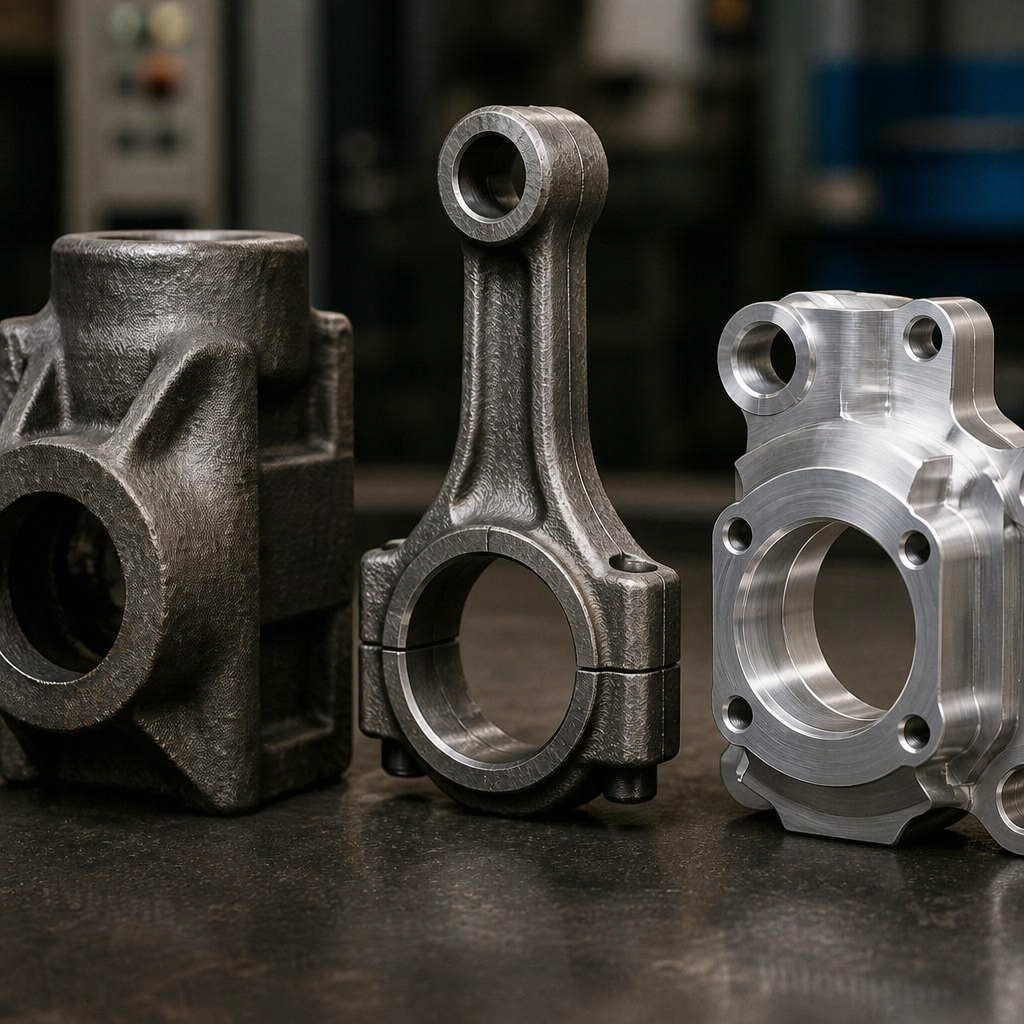
Tool construction itself varies by program need, and we build to the program, not a default. Prototype and low-volume tools are typically cut in aluminum for speed and lower upfront cost, while production tools destined for hundreds of thousands of cycles are built in hardened steel for durability. Matching tool class to program lifecycle is a design decision, and it’s one we make in partnership with OEM engineering teams rather than treating as a fixed catalog choice.
Check Article : Plastic Injection Molding: Mold Making Considerations for High-Quality Parts
Bridging Prototype and Production
Few OEM programs move in a straight line from concept to mass production. Most pass through a prototyping or bridge-tooling phase, where a small batch of parts is molded to validate fit, function, and manufacturability before committing to hardened production tooling. This phase matters because it’s the last inexpensive opportunity to catch design issues changing a gate location or wall thickness on a soft tool costs a fraction of what it costs to modify hardened steel tooling mid-production.
Because MachineMaze supports both bridge tooling and full production tooling within our own network, design intent, process parameters, and quality data carry over cleanly from prototype to production for the OEM programs we run instead of being re-learned by a new manufacturing partner at each phase. It also compresses the overall program timeline, since there’s no supplier-to-supplier handoff or requalification gap between phases, something OEM engineering teams consistently tell us matters as much as piece price.
Automobile Plastic Injection Molding Parts: A Category We Take Seriously
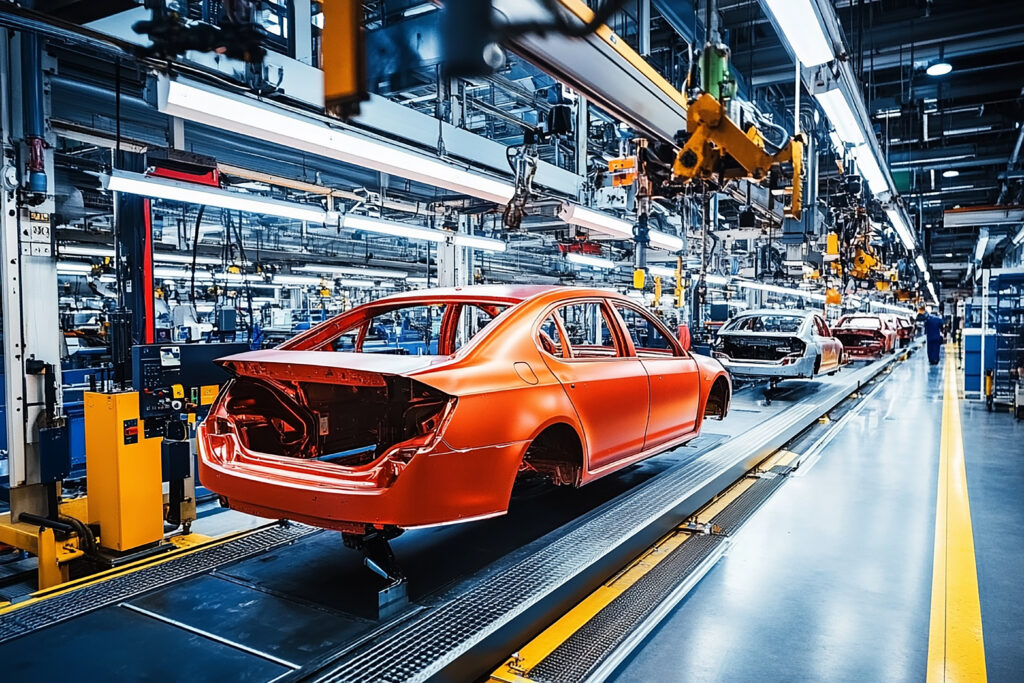
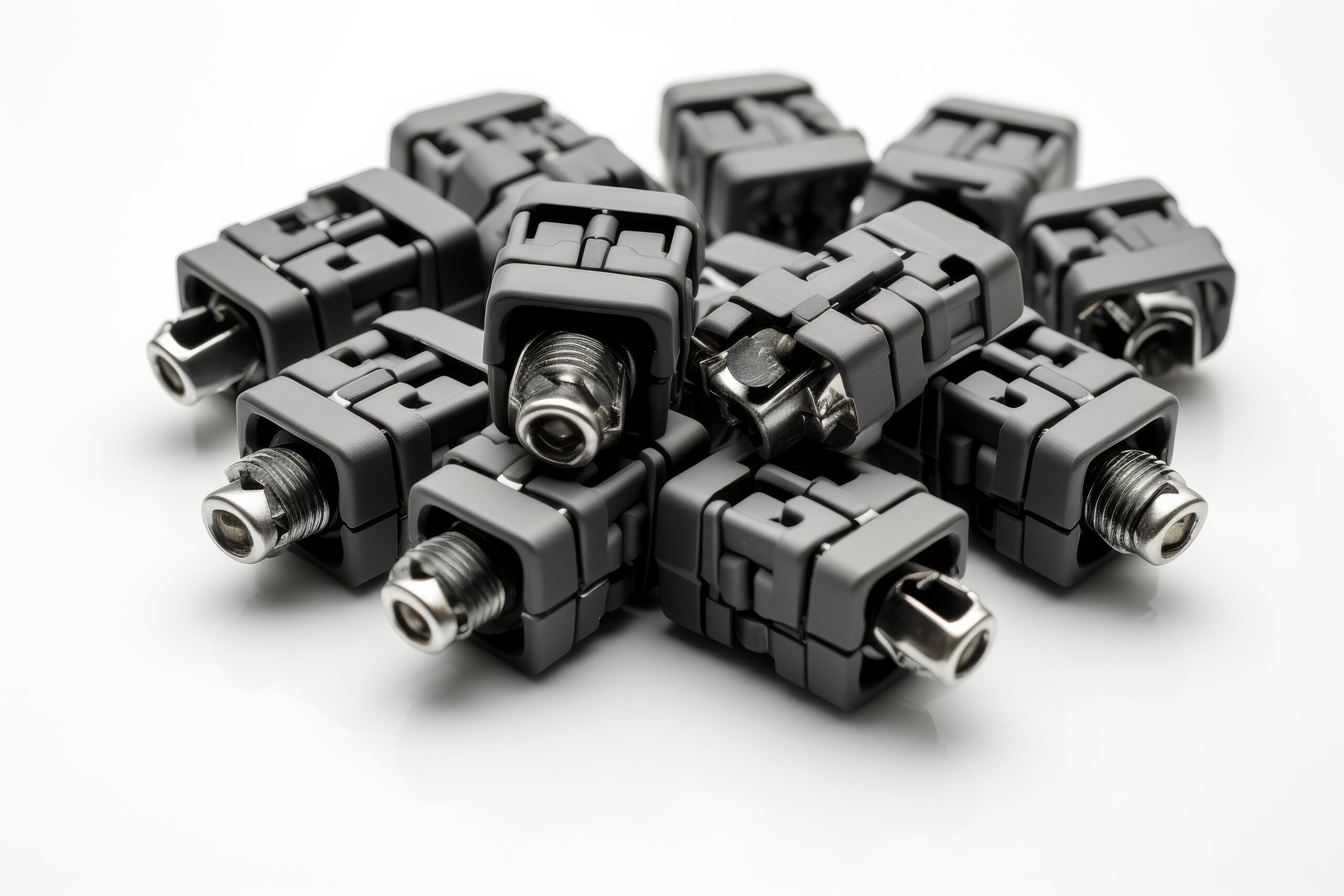
Automotive applications place some of the toughest demands on injection molding, which is why automobile plastic injection molding parts are treated as their own discipline inside MachineMaze’s manufacturing network. Interior trim, HVAC ducting, connector housings, under-hood components, and structural brackets all have to hold tight tolerances while surviving vibration, temperature swings, chemical exposure, and in many cases UL or automotive-grade flame retardancy requirements.
We already deliver plastic injection molded parts into leading OEM programs in North America and Europe, and that experience shapes how we qualify every tool and every production run: full PPAP documentation, IATF 16949-aligned quality systems, and complete material traceability are built into the process, not bolted on afterward. For OEMs sourcing automotive plastic components, supplier qualification has to start with certifications and process controls, not just piece price and it’s the standard we hold every program to, automotive or not.
What OEMs Should Look for in Injection Molding Suppliers
With so much riding on tooling and process discipline, OEM sourcing teams evaluating injection molding suppliers and this is the bar we hold ourselves to should look past headline pricing and focus on a few structural factors:
Engineering depth matters more than machine count. A supplier with strong DFM and mold-flow simulation capability will save far more in avoided reworks and scrap than a supplier offering a marginally lower quote with weaker upfront engineering. This is the core of what our tool design team brings to every program.
Quality systems need to match the application. IATF 16949 for automotive programs, ISO 9001 as a baseline for general manufacturing, and AS9100 where aerospace-adjacent tolerances or traceability are involved these certifications, which MachineMaze’s manufacturing network holds, reflect the documentation, inspection, and corrective-action processes a supplier actually runs day to day.
Capacity and scalability should be verified, not assumed. A supplier that molds a beautiful sample part on a single-cavity prototype tool needs to demonstrate it can hold the same tolerances across a multi-cavity production tool running continuously, shift after shift which is exactly the transition we manage for OEM programs as they move from validation to full-rate production.
Communication and quoting speed increasingly separate strong plastic injection molding manufacturers from the rest. Long, opaque RFQ cycles slow down entire product development timelines; our AI-powered quoting is built specifically to give OEM engineering teams an accurate, engineering-reviewed quote in under an hour, without sacrificing the DFM rigor that protects the program downstream.
Getting From Tooling to High-Volume Production With Confidence
The path from a first-shot prototype to a fully validated, high-volume production line is where injection molding programs are won or lost. It depends on tight coordination between design engineering, tooling, and process validation and on a manufacturing partner who treats each stage as connected, not siloed.
MachineMaze was built around that connection: an AI-powered quoting platform backed by an audited, IATF 16949 and ISO 9001-certified network of India-based manufacturing partners, with in-house mold and tool design expertise guiding every program from first DFM review through production ramp. We’re already running that model for OEMs across automotive, industrial, and electronics programs turning what used to be a multi-week sourcing exercise into a same-day RFQ response backed by real tooling and molding capability.
For OEMs evaluating their next injection molding program, the fundamentals haven’t changed: get the tooling right, validate before you scale, and choose a manufacturing partner whose quality systems and design expertise match the application. That’s the partner MachineMaze has built itself to be.

Request For Quote